



Transition from Military Life to the Corporate World
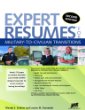
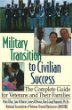
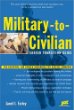
Corporate recruiters have put together transition plans and methodic preparations for a successful interview and a productive entry into the corporate world. Each plan, regardless of recruiter, centers around meticulous preparations and strengthening of one’s personal skill sets. This crux of this preparation is focused on an aggressive reading program to educate oneself on how to succeed in the corporate world. Here is a compiled reading list that will prepare you for your impending transition. Don’t have time to read lengthy books? Check out our Business Book Abstracts – receive concise 5-page summaries of the top business books.

Reengineering the Corporation
Management consultants Hammer and Champy thoughtfully critique the management procedures of American business and offer a promising prescription in this invigorating study. “It is no longer necessary or desirable for companies to organize their work around Adam Smith’s division of labor,” they state, arguing that task-oriented jobs are becoming obsolete as changes in customer bases, competition and the rate of change itself alter the marketplace. Post-industrial companies must be “reengineered,” which necessitates starting anew, going back to the beginning to invent a better way of accomplishing tasks.

Integrity Selling
It’s an invigorating book that sheds the false perception of traditional selling and exposes the primary character of sales success. This practical book helps salespeople realize that customers are not won over just by what they say but that attitude and trust is the key. The six-step process is presented in a brief and straightforward manner. It explains the theories in very tangible, simple to understand terms that are easy to execute. This book will help your performance and your customer satisfaction.

Built to Last
What makes a visionary company? This book, written by a team from Stanford’s Graduate School of Business, compares what the authors have identified as “visionary” companies with selected companies in the same industry. The authors juxtapose Disney and Columbia Pictures, Ford and General Motors, Motorola and Zenith, and Hewlett-Packard and Texas Instruments, to name a few. The visionary companies, the authors found out, had a number of common characteristics; for instance, almost all had some type of core ideology that guided the company in times of upheaval and served as a constant bench mark.

How to Win Friends & Influence People
This grandfather of all people-skills books was first published in 1937. It was an overnight hit, eventually selling 15 million copies. How to Win Friends and Influence People is just as useful today as it was when it was first published, because Dale Carnegie had an understanding of human nature that will never be outdated. Financial success, Carnegie believed, is due 15 percent to professional knowledge and 85 percent to “the ability to express ideas, to assume leadership, and to arouse enthusiasm among people.” He teaches these skills through underlying principles of dealing with people so that they feel important and appreciated.

The Goal
In this intriguing, readable business novel, which illustrates state-of-the-art economic theory, Alex Rogo is a UniCo plant manager whose factory and marriage are failing. To revitalize the plant, he follows piecemeal advice from an elusive former college professor who teaches, for example, that reduction in the efficiency of some plant operations may make the entire operation more productive. Alex’s attempts to find the path to profitability and to engage his employeesi n the struggle involve the reader; and thankfully the authors’ economic models, including a game with match sticks and bowls, are easy to understand. Although some characters are as anonymous as the goods manufactured in the factory, others ring true.

The Fast Forward MBA in Project Management
Until the early ’90s, project management was definitely located somewhere near the unsexy end of the business spectrum. But now, with the rise of downsizing and outsourcing, it has become one of the hot disciplines. Professional membership of the U.S.-based Project Management Institute has quadrupled in the last decade, and Microsoft claimed recently to have over 2 million users worldwide of its project-management software. The reasons for this growth are simple. Project management is about managing “projects,” that is, unique pieces of work (as opposed to ongoing operations). Downsizing, outsourcing, and the accelerating pace of change have meant that, increasingly, work is carried out on an ad-hoc, one-off project basis.

Leading Self Directed Work Teams
A new edition of the book that lead the self-directed work teams revolution. Leading Self-Directed Work Teams is one of the best-selling books on teams ever published. Now, the perfect guide for any team leader has been revised and expanded to reflect the new realities of team-based organizations. By explaining how team leaders differ from conventional supervisors, this informative volume which is based on the author’s successful seminars and workshops is especially useful for those managers who move from hierarchical to participatory structures.

The 21 Irrefutable Laws of Leadership
This book covers Maxwell’s 21 laws of leadership. Each chapter describes the law in detail, and provides many historical examples to help reinforce the principle. As a military officer, I understand the principle role that leadership plays in an organization’s success. During my short career (10 years), I have been in both great and lousy units. Each time, I can trace the unit’s performance directly to its leader and his/her ability to influence its members to accomplish the mission and take care of its people. My personal experience only helped reinforce the material, and verified in my mind that John Maxwell is “on-target” with his laws.

World Class Manufacturing: The Lessons of Simplicity Applied
John P. Robb Vice President, Manufacturing Monsanto Electronic Materials Company The commonsense examples and guidelines on the “how to” of total quality control Richard Schonberger provides in World Class Manufacturing will enable us to move beyond manufacturing excellence to business excellence. Schonberger’s first book, Japanese Manufacturing Techniques, provided the missing link in our overall quality program and is on the “must read” list for all our manufacturing line personnel. World Class Manufacturing will be required reading for all functions within our company.
Business Book Abstracts
Most people don’t have the time in their busy day to read great volumes of business books to stay on top of their industry. Check out our Business Book Abstracts – receive concise 5-page summaries of the top business books. Our clients include some of the most sophisticated and knowledge-driven firms in business today, such as Microsoft, Citigroup, Daimler, Ernst & Young, PricewaterhouseCoopers, Boeing, SAP, UBS, Credit Suisse, Novartis and MasterCard.
What Is an Abstract Summary?
Each five-page summary is presented in a crisp, magazine-page format. You can read it in less than 10 minutes – the perfect length to deliver the book’s key ideas. The no-fluff summaries are logically structured to get the maximum out of your reading time.
More than 4,500 Summaries
Select from more than 4,500 summaries. That’s 10 times the selection of a typical summary site. Download the summaries you need right away.
500 New Summaries Every Year
Every year we add summaries of the 500 best new business books. That’s another example of how we beat typical summary sites ten-fold.
Which Books Do You Summarize?
The short answer: All the business books essential to your job and your career.
The longer answer: We monitor the publication of more than 10,000 business books every year. Every book that survives our initial team screening is rated from zero to 10 using a rigorous review process. Our rating criteria are applicability, innovation and style. We only prepare summaries for those books which earn an overall rating of five or higher to assure the quality of the material you receive. That’s 500 new titles every year. Book titles featured on getAbstract are of exceptional quality.

Military-to-Civilian Transition
Military Resumes
Military Resume Tips – Tips on how to write the best resumes
Military Resume Example – Examples of military resumes
Cover Letters – Tips and examples of cover letters for your resume
Military Aviation Resumes – Examples of military aviation resumes
Résumés & Letters of Recommendation – help and advice
Military-to-Civilian Transition Resume Service – Online Service
Military to Civilian Transition
Military Transition – How to best present yourself to civilian companies
Military Transition Reading List – Reading list recommended by top military corporate recruiters
Negotiating a Salary – What salary are you looking for?
Hire Veterans – Find out why Companies are looking for veterans
Federal Government Jobs – Tips and advice on how to find a Federal Job
Prepare for the Interview
Corporate Interview – Overview on how to prepare for your corporate interview
Behavior-Based Interviews – Behavioral interviewing is a relatively new mode of job interviewing
Interview Questions – Prepare for the typical corporate job interview questions
Communications – Get some advice and tips from the pros on how to communicate better
Post Resumes & Browse Jobs
[ Employment911.com ] [ Monster.com ] [ Executive Search ]


